RSS

Imagine if you dreamed of owning a special limited edition vehicle. What would you do to ensure that your dream vehicle would someday be parked in your driveway — with your name on the ownership papers?


You would probably start by doing some research. You’d find out how much that vehicle would cost, what features are available, and so forth. You would likely visit a local dealership and take a test drive if a model is available on site. You would keep an eye on the market for any that come up and let the dealer know you’re looking for just that car.


If you did, then, some day, you’d probably be the proud owner of the limited edition car of your dreams.


What does this have to do with real estate?


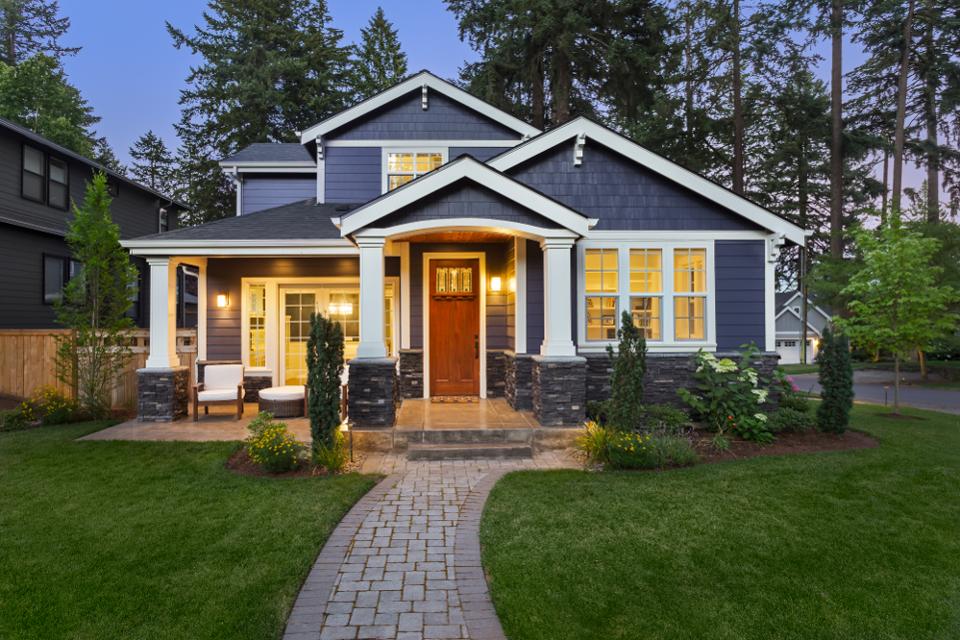
Well, you can take the same approach when there’s a neighbourhood you’d love to live in someday. You can target it, learn what homes typically cost in that area, and keep your eye on that market in case a property becomes available that meets your criteria.


By focusing on a specific neighbourhood, you increase your chances of someday living there, simply because you’re focusing on it.


Of course, neighbourhood targeting isn’t as simple as aiming to own a specific car someday. That’s why you need a great REALTOR® who can keep an eye on that neighbourhood on your behalf and alert you to opportunities that become available.


Then, when there is a listing that’s a good fit, you can decide whether or not to make a move.


Is there a dream neighbourhood you’d like to live in some day? Call today to start making it happen.

Read

How to Amp Up The Resale Value of Your Home


Whether you're putting your home on the market this year or in the next five years, it is a smart decision to start building your home's resale value now. Here are some ways to create a comfortable home while making it easier to put more money into your bank account on closing day.


Small Maintenance and Repairs


If you think that home maintenance on the weekends is a low priority, think again. The small chores you do around your home prevents it from losing value. Neglecting small maintenance and repairs causes 10% of your home's value to walk out your door and slip through your windows. Most appraisers claim that homes showing little to no preventative maintenance can depreciate from $15,000 to $20,000!


Preventative maintenance can also actively increase your home’s resale value — according to a recent study, by about 1% per year! Also, because homebuyers generally notice any repairs needed upon buying a new home, proactive maintenance lets the homebuyer know that he or she will not have to spend extra money to maintain the basics. This makes your home more attractive, and thus more likely to get higher priced offers.


Remodeling Ideas and Tips That Work


Studies show that a home valued at $150,000 could increase its value between $8,300 and $19,000 with the addition of landscaping. These studies also note that positive landscaping can reduce the amount of time your home spends on the market!


Changing out the doors of your home is also generally a smart design choice. Lately, fiberglass and steel doors are a coveted aesthetic by homebuyers. A steel door costs $1,335 but has a whopping 91% return on investment. A fiberglass door, on the other hand, costs about $3,126 with an 82.3% return on investment. Likewise, a new fiberglass or steel garage door distinguishes your home from the rest on your block and provides a 91.5% return on a $1,652 investment.


Finally, matte paint finishes will trend in 2016 because of its transitional qualities. With a matte finish, your potential homebuyer can easily match his or her stainless steel or black and white appliances. It’s touches like these that make your home appealing to a wide variety of homebuyers, and that drives up its resale value.


Your Needs and Buyers' Wants


On that note, if you need to renovate your home, be sure to consider how those changes will affect its appeal to future buyers. Knowing design trends will give you the opportunity to make changes to your home based on where your needs and your potential buyer's desires intersect, thus increasing your property's resale value drastically.


Designers and design websites provide great ideas when you’re brainstorming home renovations. Keep in mind as you research, however, that you don’t want to sacrifice your needs for a comfortable home just for the sake of what you think a future buyer will want!


Therefore, before you begin making any changes to your home, consult your real estate agent. Real estate agents, because we are constantly working with new buyer clients, have insider insight into what home buyers are looking for now and in the future. We’ll be able to help you make smart choices when remodeling or renovating your home.


If you think you might want to remodel or renovate your home in the near future, or if you are just curious about other ways you can increase its resale value, please reach out to me!


Kevin Leuschen

306-280-7923

kevinleuschen@gmail.com


www.Kevinleuschen.ca


Royal Lepage Hallmark

Read

INCREASE IN HIGHER END HOME SALES

Saskatoon continues to hold its own in the face of challenging economic times. Year to date the number of homes that have sold over $700,000 has increased by 18% for a total of 26 units. This has helped to keep the average sale price for Saskatoon at $344,000 which is only 2% below the average a year ago. By comparison, the median price for a home in Saskatoon was up 1.2% Overall unit sales are down 6% year over year from 764 units to 715. March saw a slowing in the pace of the number of homes listed for sale helping to slow the growth of the inventory. At the end of March there were 1,857 properties available for sale in the city of Saskatoon, an increase of 6% over 2015. The number of days to sell a home on average in Saskatoon in March was 46.

The CREA Composite Home Price Index was down 2.7% from last March indicating that there continues to be a very slight decline in housing prices overall. Homes that are sold by Saskatoon REALTORS® are realizing just over 97% of their asking price and are selling in 46 days on average. "Economics tells us that an increase in supply levels will have levelling or declining effect on prices" comments Jason Yochim, CEO of the Saskatoon Region Association of REALTORS®, "Having said that, there are segments of the market that are performing well provided homes are priced properly" he adds "this will generate the interest needed to obtain a strong sale price. A REALTOR® not only has the market expertise but is objective and emotionally detached from the transaction."

The sales to listing ratio is determined by dividing the number of sales for the month by the number of newly listed homes. This ratio for March was 38% which is consistent with last year. A ratio lower than 40% is considered a buyers' market.

By comparison, the market surrounding Saskatoon, which includes rural residential property, the cities of Warman and Martensville and smaller bedroom communities, has experienced a 12% decrease in unit sales year to date. The number of combined first quarter sales in the cities of Martensville and Warman has been declining steadily over the past three years. In 2014 the year to date sales were 134 units, in 2015 107 units and in 2016 the total number of unit sales was 82. The average price for a home in Warman this year is $373,000 compared to $327,000 in Martensville while the median price is $359,450 and $318,759 respectively. In Warman and Martensville the average days to sell was 55 and 59 respectively.
 
Read


Do you ever wonder how most people find the homes they eventually buy? You might imagine them driving by a “For Sale” sign or seeing a home for sale in the newspaper and then calling to enquire.


Of course, many buyers find out about listed properties that way. But, according to research by the National Association of Realtors, there are many other — sometimes surprising — ways buyers find their next dream home.


For example:


  • 88% of buyers find a home with the help of a real estate agent.


  • 90% of buyers search online as part of the home buying process. (Such as viewing a property’s profile on the agent’s website.)


  • 69% of buyers searching for a home using Google, use a specific local term, such as “Whitby-south homes for sale”.


  • 29-46% of buyers attend an Open House as part of their home hunting activities.


Overall, the research shows that buyers are using a multitude of ways — combining online and offline methods — to find homes. 


What does all this mean to you? If means that if you’re preparing your home for sale, you need to ensure your marketing plan takes into account all the ways buyers are finding properties — so you can be sure that they will find yours.


Looking for a REALTOR® who knows how to market your home for maximum exposure? Call Kevin today!

Read

How to Buy a Home: 7 Tips and Tricks from Real Estate Insiders

No matter if you’re in a buyer’s or seller’s market, there are a few critical steps you can take to make a smarter purchase. Since buying a home is likely the biggest single investment you will ever make, being prepared will help you make a better purchase. Here are our best tips to buying a home.

Know your buying power

What is your buying power? It is the combination of your credit-worthiness and how much you can realistically pay for a home.

First, you need to understand the hidden costs of buying a home. You will need to save not only for the down payment of your home -- which is typically between 10% - 20% of the offer price -- but also for any additional transaction fees, such as title transfer tax, utility setup costs, title insurance, and legal fees... not to mention moving expenses!

Then you need to know what you can realistically afford each month to understand how much house you can buy. Your mortgage rate will depend on your creditworthiness -- if you have a high credit score, your lender will likely approve you for a lower mortgage rate, which can save you thousands of dollars per year in interest.

How much of your budget should go to your monthly home costs? According to SmartAssets, you can use the 36% rule as a rough guideline. This means that your monthly obligation shouldn’t be more than 36% of your monthly gross income.

A loan professional can help you figure out how much house you can afford.

Fix your credit with the help of a loan professional - ask Kevin Leuschen to recommend a trusted advisor!

According to CreditKarma, a good credit score is usually 720 or above. You want to clean up your credit as soon as you can, and definitely before you go to a lender for a loan preapproval.

When you apply for your loan pre-approval, you don’t want to have anything to hide on your application. So don’t lower your credit score by doing anything that will originate more inquiries into your credit. For example, don’t open any new credit cards. Also, don’t omit any debts or loans when you apply. If the loan officer discovers them in the application process, they may deny you a pre-approval.

Get a loan professional to check your credit score for you. A professional can give you a clearer idea if your score is in the ‘good’ range, or if you need to do some credit cleanup before getting a mortgage preapproval.


Work with a knowledgeable buyer’s agent

Do you understand what kind of market you are buying into? Even within a city’s limits, there can be micro markets that are increasing or decreasing in value.

That’s why it’s important to hire a highly competent real estate agent who knows the specific market. You want to make sure that the professional who you’re working with really understands what the market is like and will help you find the home that you desire.

How can you tell if your agent knows the market? See if they can provide you with a buyer’s market analysis.

A buyer’s market analysis report outlines which neighborhoods are still up and coming -- with potential for increased property value -- versus those that have peaked with inflated home prices. Having this analysis at your fingertips will help you know if a home’s list price is above comparable properties so you don’t overpay for a home.

Don’t try to time the market...

Even in a hot market, there’s never a perfect time to buy a home. It can take a while to know exactly what you like, and you may have to look at 10 or more homes before you can recognize what suits your lifestyle best. While you’re shopping, take photos of your favorite properties and the details that you liked the best so that you can remember what you liked.

Another good reason to slow down the buying process: you might find a better deal if you do. It’s not likely worth your time to look at FSBO (for sale by owner) listings, though. Since they are not represented by a professional, they are often overpriced.

When you start shopping, have a one-hour initial consultation with your realtor. Give them every single detail that you know about your lifestyle, buying power, needs, wants and desires for your home. The more detail you can provide, the easier it will be for them to help you find your future home. Your agent may also know of exclusive listings not available to the general public.

… But make the offer as soon as you find the right home

If you love it, make the offer. Otherwise, that dream home may disappear faster than you think, especially if you’re buying in a hot market.

Your buying agent should contact the listing agent before you submit an offer so that they can decide what’s important to include in the offer. If you’re serious about it, you want to increase the chances that your offer is accepted.

Get a home inspection

Once you’re in the negotiation process, it’s essential that you get a third-party inspector to run a thorough home inspection. The inspector will be looking for major structural issues, including problems with the foundation, plumbing, and electrical systems. Your inspector should be picky, pointing out the most minor faults.


Protect your credit before you close

Don’t raise any red flags with your creditworthiness in the weeks before closing. Any one of these moves could mean that you’re denied the loan and the deal falls through -- even if you’ve already been preapproved!

Keep your spending to a minimum and don’t make any major purchases before closing -- that includes buying furniture, or a car, truck, or van, or any excessive charges on your credit card.

Keep your bank accounts stable. Don’t change banks, spend any of the money you have set aside for closing, or make any large deposits to your accounts without checking with your mortgage broker first.

Keep your employment situation stable -- do not change jobs, quit your job, or become self-employed. Any sudden change in your income can have that preapproval offer rescinded.

Do not cosign a loan for anyone. It will open an inquiry into your credit and add to your debt, which could raise your mortgage rate and cost you thousands of dollars over the life of the loan.

Looking for a home in the Saskatoon area? Let Kevin help you find the home of your dreams. Kevin is well versed in the our local real estate market, and can provide you with a buyer’s market analysis to help you find the right neighborhood for you. Contact Kevin Leuschen today!

Read
The Saskatchewan REALTORS® Association (SRA) IDX Reciprocity listings are displayed in accordance with SRA's MLS® Data Access Agreement and are copyright of the Saskatchewan REALTORS® Association (SRA).
The above information is from sources deemed reliable but should not be relied upon without independent verification. The information presented here is for general interest only, no guarantees apply.
Trademarks are owned and controlled by the Canadian Real Estate Association (CREA). Used under license.
MLS® System data of the Saskatchewan REALTORS® Association (SRA) displayed on this site is refreshed every 2 hours.